Food Safety Myths That Could Make You Sick

A meal can look fine, smell fine, and still make someone sick.
That is what makes food safety so easy to underestimate. We spend a lot of time talking about protein, fiber, vitamins, antioxidants, and what foods we should eat. Those things matter. But nutrition only helps if the food is safe to eat in the first place.
September is National Food Safety Education Month, which makes it a good time to clear up some common kitchen myths. According to the Centers for Disease Control and Prevention, about 48 million Americans, roughly 1 in 6 people, get sick from foodborne illness each year. About 128,000 are hospitalized, and about 3,000 die.
One reason foodborne illness is so tricky is that dangerous food does not always look spoiled. Pathogenic bacteria and spoilage bacteria are not the same thing. Food can smell awful because spoilage organisms have taken over but not be especially dangerous. It can also look completely normal while containing enough harmful bacteria or toxin to make you sick.
This article is for general education only and is not a substitute for medical advice. If someone has severe symptoms after eating, such as bloody diarrhea, repeated vomiting, dehydration, high fever, or symptoms in an infant, older adult, pregnant person, or immunocompromised person, seek medical care.

Myth 1. You should wash raw chicken before cooking it
This myth is deeply ingrained in many households. Chicken feels like something that should be washed before cooking. We wash produce, dishes, hands, and counters, so rinsing poultry can seem like the careful thing to do.
But raw poultry is different.
Washing chicken does not make it safer. It can spread bacteria around the kitchen.
Raw chicken can carry organisms such as Salmonella and Campylobacter. When chicken is rinsed under running water, tiny droplets can splash onto the sink, faucet, counters, nearby dishes, towels, and other foods. You may not see the splatter, but it can spread farther than expected.
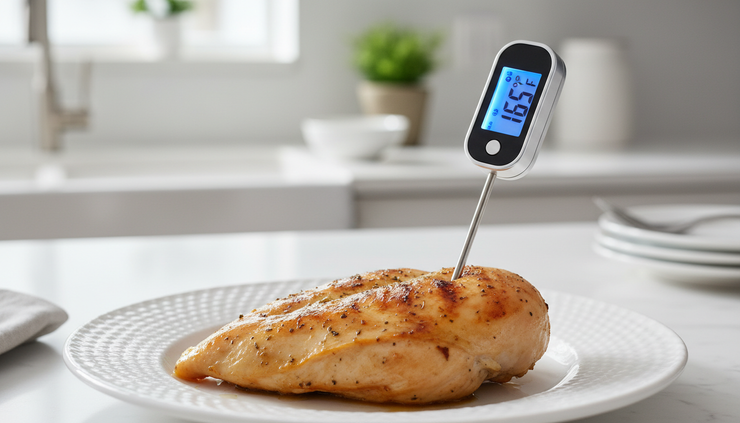
Cooking is what makes chicken safer, not rinsing. Poultry should reach an internal temperature of 165°F, measured with a food thermometer in the thickest part of the meat.
A safer routine looks like this:
Keep raw chicken in its packaging until ready to use.
Use a separate cutting board for raw poultry.
Pat dry with paper towels if needed, then throw them away.
Wash hands, utensils, and surfaces with hot, soapy water.
Sanitize surfaces that touched raw poultry.
Cook to 165°F.
The sink is not a safety tool for chicken. The thermometer is.
Myth 2. If leftovers smell fine, they are fine
The sniff test is one of the most unreliable food safety habits.
Spoilage bacteria often create unpleasant odors, slime, gas, or visible changes. Pathogens may not. That means leftovers can smell normal while still carrying bacteria that can cause illness.
A better guide is time and temperature.
Perishable leftovers should usually go into the refrigerator within 2 hours. If the food has been sitting in temperatures above 90°F, such as at a picnic, in a hot car, or outside on a summer day, refrigerate it within 1 hour.
Once refrigerated, most leftovers should be eaten within 3 to 4 days. If you will not eat them in that window, freeze them.
The refrigerator also needs to be cold enough. Keep it at 40°F or below, and keep the freezer at 0°F. A small appliance thermometer is inexpensive and more reliable than guessing from the dial setting.
Myth 3. Expiration dates always mean the food is unsafe
Date labels are confusing because they do not all mean the same thing.
In the United States, many labels such as “best by,” “best if used by,” and “sell by” are about quality, not safety. They often tell you when the product is expected to taste or perform best. A cracker may be stale after its best-by date, but that does not automatically mean it is dangerous.
One major exception is infant formula. Formula should not be used after the “use by” date because nutrient quality and product performance matter for infant health.
Even when a date is about quality, storage still matters. A food kept too warm, left open, or contaminated after opening can become unsafe before the date on the package. A food stored properly may still be usable shortly after a quality date, depending on what it is.
Use dates as one tool, not the only tool. For safety, pay attention to:
Whether the package is leaking, bulging, badly dented, or damaged
Whether refrigerated foods have stayed cold
How long the food has been open
Whether the food is high risk, such as meat, seafood, dairy, cut fruit, cooked grains, or prepared meals
When in doubt with a high-risk food, throw it out.

Myth 4. Rice is harmless because it is dry and plain
Cooked rice seems low risk. It is simple, bland, and often served with foods that seem more likely to cause illness, such as meat or seafood.
But cooked rice can be risky if it sits too long at room temperature.
Uncooked rice can contain spores of Bacillus cereus. Spores can survive cooking. When cooked rice sits warm for too long, those spores can grow and produce toxins. Reheating may kill some bacteria, but it may not destroy all toxins that have already formed.
This is why fried rice, rice bowls, meal-prep rice, and large pots of rice need careful cooling.
The safer approach is simple:
Do not leave cooked rice sitting out for hours.
Cool large batches quickly by spreading them in shallow containers.
Refrigerate rice within 2 hours.
Reheat until steaming hot.
Eat refrigerated cooked rice within a few days.
Rice is not dangerous by nature. The risk comes from letting it linger in the temperature range where bacteria grow best.
Myth 5. You can cut mold off anything and eat the rest
Sometimes you can cut away mold. Sometimes you should not.
Mold has visible parts on the surface, but it can also send thread-like structures into food. In soft, moist foods, those structures can spread more easily. Some molds can also produce toxins.
As a general rule, discard moldy soft foods, including:
Bread
Berries
Cooked leftovers
Yogurt
Soft cheeses
Jams and jellies
Tomatoes and other soft produce
Hard cheeses and firm produce are different. If mold appears on a hard cheese, such as cheddar or Parmesan, you can usually cut at least 1 inch around and below the moldy area, keeping the knife out of the mold itself. Firm produce such as carrots or cabbage can often be handled similarly.
But if a food is soft, wet, crumbly, or porous, mold is not just a surface problem. Toss it.
Myth 6. A lunchbox with an ice pack is safe all day no matter what
An ice pack helps, but it is not magic.
Packed lunches often include perishable foods such as deli meat, cheese, yogurt, cut fruit, eggs, hummus, tuna, or chicken salad. These foods need to stay cold until lunchtime. If a lunchbox sits in a warm classroom, car, gym bag, or locker for several hours, one small ice pack may not be enough.
Pack lunches with temperature in mind:
Use an insulated lunch bag.
Add two cold sources for perishable foods, such as frozen gel packs or a frozen water bottle.
Pack cold foods straight from the refrigerator.
Keep the lunch out of direct sun and away from heat.
Use a thermos for hot foods, and preheat it with hot water before filling.
For hot foods, the goal is to keep them hot, not lukewarm. Soups, chili, and leftovers should be heated thoroughly before going into a clean insulated container.
Food safety is especially important for children because they may not notice when something has been sitting too long, and they may be less able to explain symptoms clearly.

Myth 7. Marinade makes raw meat safe
Marinade adds flavor. It does not reliably make raw meat safe.
Acidic ingredients such as vinegar, lemon juice, or wine can affect the surface of meat, but they do not sterilize it. Bacteria can still remain, especially in folds, crevices, or thicker pieces.
There is another common mistake: using marinade that touched raw meat as a finishing sauce.
If marinade has been in contact with raw poultry, meat, or seafood, treat it as contaminated. You have two safe options:
Set aside some clean marinade before adding raw meat.
Boil used marinade before serving it as a sauce.
Marinate foods in the refrigerator, not on the counter. Cold temperature slows bacterial growth while the meat absorbs flavor.
Myth 8. Freezing kills all bacteria
Freezing is useful, but it is not a reset button.
Freezing stops many bacteria from growing, but it does not kill all of them. Once food thaws and warms up, surviving bacteria can become active again.
That is why safe thawing matters. The safest methods are:
In the refrigerator
In cold water, with the food sealed and the water changed often
In the microwave, if you cook the food right away
Avoid thawing meat, poultry, or seafood on the counter. The outside can warm into the danger zone while the center is still frozen.
Freezing also does not fix food that was unsafe before it went into the freezer. If leftovers sat out all afternoon, freezing them later does not erase that history.
Myth 9. Rare burgers are like rare steaks
A rare steak and a rare burger are not the same from a food safety standpoint.
With a whole steak, most bacteria are on the surface. Searing the outside can reduce that surface risk. Ground beef is different because bacteria from the surface can get mixed throughout the meat during grinding.
That means the center of a burger needs to reach a safe temperature. Ground beef should be cooked to 160°F, measured with a food thermometer.
Color is not enough. A burger can turn brown before it reaches a safe temperature, and it can stay pink even after it does. Use a thermometer instead of guessing.
Myth 10. If you are careful, you do not need a food thermometer
Many skilled cooks can judge texture, browning, and doneness well. But none of those signs reliably prove that food reached a safe internal temperature.
A food thermometer removes the guesswork. It is useful for:
Chicken and turkey
Burgers and meatloaf
Pork chops
Egg dishes
Casseroles
Reheated leftovers
Clean the thermometer probe after each use, especially between raw and cooked foods. Insert it into the thickest part of the food, away from bone when possible.
A thermometer does not make cooking harder. It makes the answer clearer.
The habits that prevent most kitchen mistakes
Food safety can sound intimidating because there are many organisms, temperatures, and rules. In daily life, it comes down to four habits.
Clean
Wash hands with soap and water before cooking, after handling raw meat, after using the bathroom, and after touching pets, trash, or phones. Clean cutting boards, utensils, and counters after contact with raw animal foods.
Separate
Keep raw meat, poultry, seafood, and eggs away from ready-to-eat foods. Use separate cutting boards when possible. Do not place cooked food back on a plate that held raw meat unless the plate has been washed.
Cook
Use safe internal temperatures. The most familiar ones are 165°F for poultry and 160°F for ground beef. Reheat leftovers until hot throughout.
Chill
Refrigerate perishable foods promptly. Keep the refrigerator at 40°F or below. Cool large batches in shallow containers so they chill faster.
These habits are not about fear. They are about lowering risk in simple, repeatable ways.
Food safety often fails in ordinary moments: rinsing chicken because it feels cleaner, leaving rice on the counter, trusting a sniff test, packing one tiny ice pack, or assuming a date label tells the whole story.
The best protection is not complicated. Keep cold foods cold, hot foods hot, raw foods separate, hands clean, and cooked foods verified with a thermometer. Your food does not need to look scary to be risky, and your kitchen does not need to be perfect to be much safer.


Comments